Small Museums to Spend a Rainy Afternoon in Paris

Who knew that winters in the city of light were so cold and grey?!

So what do you do when it’s raining, there’s nothing to watch on Netflix, and you don’t want to deal with the craziness of the Louvre? Spend an afternoon at one of Paris’ many small museums! These museums have equally impressive collections without the chaos and crowds of the larger, more popular institutions. Here are my three favorites to get you started…

Note: All of these museums are free (yes, as in $0) for EU residents under the age of 26 (meaning all au pairs). Just bring your passport/visa as proof.

Musee National Picasso

Let me start by saying, the Picasso Museum is always a good idea. The collection is superb, exhibition space and lighting warm and inviting, and the building itself is a work of art. But on rainy days in particular, this museum is a home-y and comfortable haven in the heart of the Marais. The collection holds more than 5,000 of Picassos paintings, sculptures, drawings and engravings as well as records of his creative process. Beautifully displayed throughout the historic Hotel Sale, this museum gives you a glimpse into Picasso’s colorfully eccentric world.


Musee Bourdelle

As you enter the Musee Bourdelle, you are transported back in time to the artists’ 19th century artelier. Monumental sculptures are harmoniously displayed amidst sculpting tools and other relics, offering a unique and intimate way to learn about Bourdelle and his work. Antoine Bourdelle was an influential and distinguished French sculptor, painter and teacher active in the late 1800s. The artists’ original studio, where he lived and worked through the early 20th century, has been turned into a museum, displaying his variety of work. The museum collection contains more than 500 pieces, from sculptures to sketches, naturally displayed throughout the various rooms, workshops, and gardens on the property. (Note: this museum is free for ALL visitors!)


Processed with VSCO with m5 preset

Musee National Gustav Moreau

If you are in the mood for a more ~groteque~ museum experience, the Moreau Museum is for you. Gustave Moreau’s was a late 19th century French painter whose works are known for their imaginative and morbid symbolism and motifs. Designed by the painter himself, the museum is housed in Moreau’s original family home. The colorful apartments and workshops contain sentimental relics in addition to more than 5,000 of the artists paintings and drawings. A trip to the museum feels like a journey to Moreau’s fantasy realm, as you traverse the unique stairwells, boudoirs, and artistic themes.


The Bibliothèques of Paris

One day, when scrolling through Instagram, I came across a photo of the beautiful Bibliothèque Richelieu reading room. Before that moment (like many University students), I had come to associate libraries with dreary, concrete, buildings filled with florescent lights, late nights, and suffering students. This library, however, changed everything. The following day, I took a trip to Bibliothèque Richelieu and suddenly viewed libraries in a brand new light. 

Many (though certainly not all) libraries in Paris are more than just collections of books– they are historic and architecturally acclaimed centers of culture, expositions and art. While most are exclusive and not open to the public, there are several that let tourists in to admire the beauty and history that lies within. 

A simple Google search can show you all the libraries (or bibliothèques in French) in Paris, but if you are like me and just want to see the most aesthetically pleasing ones, I have rounded up my favorites– and they all are free! 

Bibliothèque Richelieu

58 rue de Richelieu
open Monday – Saturday 10am -6pm

This library will always be my favorite. It is absolutely beautiful with 2 stories of books, domed ceilings, and bright frescos. From the street, you enter through a courtyard and the library is on your right. There is a small roped off area where visitors are allowed to stand to view the room and take pictures. While it is definitely not somewhere to spend an afternoon, it is certainly worth a quick-pit stop. 

Bibliothèque Sainte-Genevieve 

10 Place du Pantheon 
Open to the public for visits Monday – Saturday, 2 – 4pm

Located right across the street from the Pantheon and surrounded by University students, this library definitely feels livelier than the others. When you enter the building, go to the visitors desk on the left. A staff member will then accompany you to the entrance of the reading room while telling you a brief history of the building and the collection. While more crowded than the other two libraries, the reading room is still spectacular.  It is both a university and a public library, so it is possible for anyone to get a membership card (just bring an official Passport/ID and register at the designated desk). 

Bibliothèque Mazarine

23 Quai de Conti
Open Monday – Friday 10am – 6pm

This library originally opened to scholars in 1643, making it France’s oldest public library. Today, this unassuming library is a hidden gem in the heart of Paris. From the street, signs direct visitors to a check in desk and then through a courtyard. You enter the building on your left and follow signs up the stairs to the library. The reading room is much smaller than the other two and feels more intimate. You can actually peruse the shelves of books and are welcome to sit and study amongst the other scholarly patrons. 

Other libraries on my list include Bibliothèque de la Sorbonne and Bibliothèque Forney, though I have yet to visit either. 

I hope your find these libraries as fascinating as I do!

27 Hours in Vienna

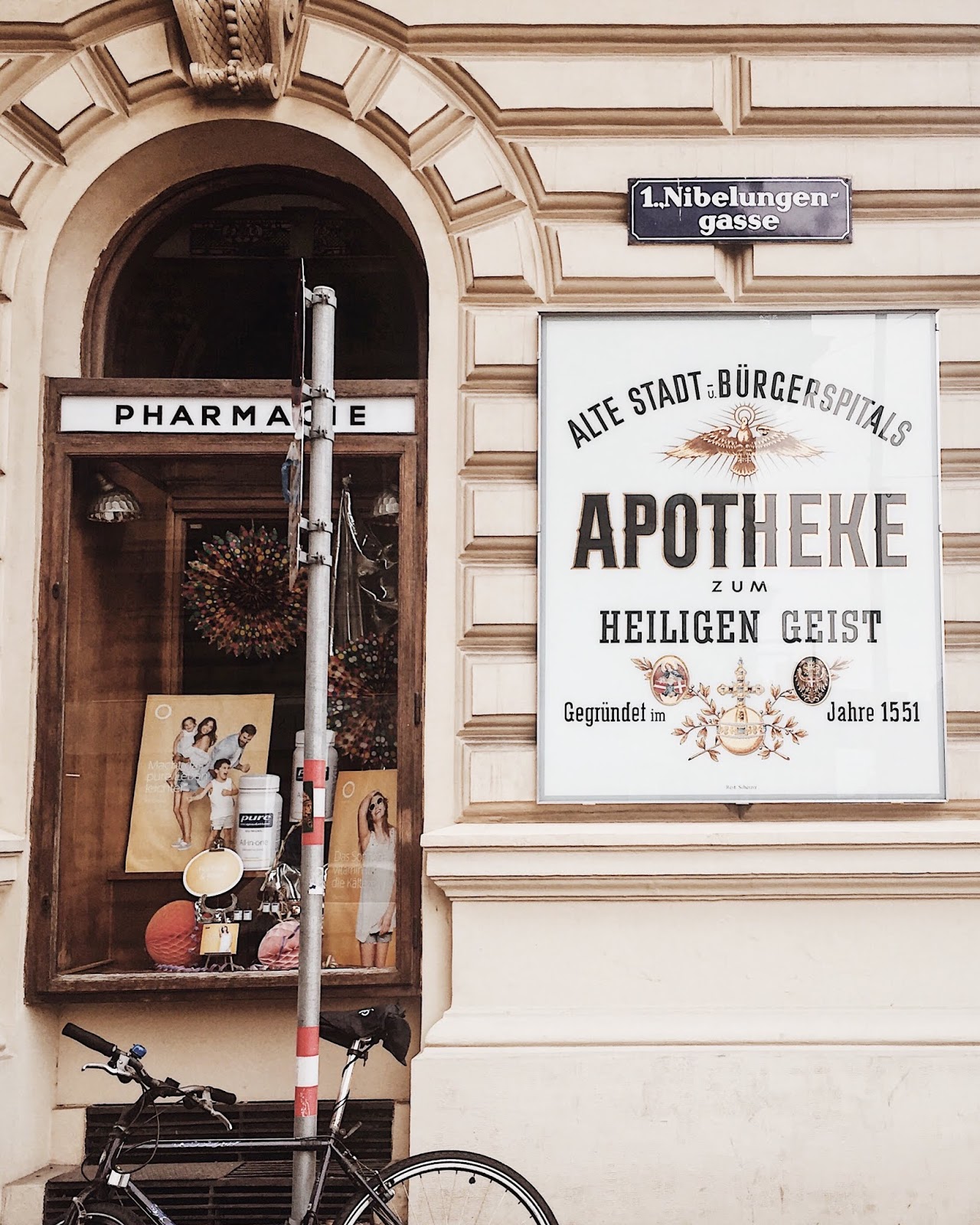
A little over 2 years ago, I was told by a very cultured and well-traveled friend that I must visit Vienna– “it’s such a you city”,  I recall her telling me. Since then, Vienna has been #1 on my travel bucket list. Finally, for my birthday I treated myself to a weekend trip to Austria’s flourishing capital. 

While it was difficult to streamline what could be a weeks-worth of historical monuments, cultural attractions, and aesthetic store fronts into a 2-day itinerary, I am beyond satisfied with what I saw given my short amount of time. After my visit, Vienna has easily become one of my favorite cities in Europe, and I hope (given the help of this guide) you find her charm, creativity, and opulence just as enchanting. 

Below you will find a short and sweet overview of Vienna’s history, top cultural spots to visit, where to eat, where to get your best Instagram shots, and where to stay. 

HISTORY

Before I begin, I am going to give you a brief rundown of Vienna’s vast history (but I’ll use bullet points to make it less daunting). Vienna’s past is represented throughout the city and knowing a bit about it will give you a deeper understanding and appreciation of Viennese cultural and sites. 

  • Vienna’s history dates back to 15 BC when the land functioned as a prosperous trading post for the Celts. The Romans soon arrived and over the next several years, the post transformed into a prosperous town. For the ensuing centuries, the town would change hands several times. 
  • In the 16th century, the Babenbergs gained control and the Hasburgs would come to rule until the city was besieged by the Turks in 1529.
  • During the Reformation and Counter Reformation, Vienna endured revolts and civic unrest, and later suffered through plague and siege at the end of the 17th century 
  • In the 18th century, however, the city experienced a prosperous Golden Age, characterized by civil reform, a classical music revolution (queue Mozart) and most notably baroque architectural development (largely attributed to Empress Maria Theresia and Emperor Franz Joseph). 
  • During the early 19th century, Napoleon briefly occupied the city but by 1820 Vienna was once again independent and flourishing.
  • Then WWII began, and with it came a period of decline. In the 1920s, fascism was on the rise and prompted much internal conflict; in the 1930s Vienna suffered under Hitler’s influence and later Allied bombing.
  • Since 1955, however, Vienna has been a thriving cultural center. It has taking its hardships in stride and is now a city steeped in rich history, with beautiful architecture, and a brilliant cultural scene. 

CULTURAL SITES

St. Stephens Cathedral 

  • Built in the 12th century, St. Stephens Cathedral is one of the most important Gothic structures in Austria. No trip to Vienna would be complete without seeing it and snapping a picture of its incredible tiled roof. While you are there, go inside and see the beautiful altarpiece and Gothic interior (for free!).

Hofburg Palace

  • This palace served as the base for the Habsburgs for over six centuries (including the much-loved Empress Elisabeth (or Sisi) and Emperor Franz Joseph). Today it is the residence of Austria’s president and the home of many museums

Kunsthistorisches Museum

  • Opened around 1891 under Emperor Franz Joseph, the structure was built to house the imperial art collection. The collection contains notable works by Jan Van Eyck, Raphael, Durer and Bruegel, but most spectacular in my opinion is the building itself, with elaborate marble columns, tiled floors, and a ceiling painted by Klimt. Even for a poor au pair like myself, the seemingly steep admission prices are beyond worth it– and do not miss the museum cafe! 
  • Admission is between 12 and 14 euros

State Opera House

  • Built in 1869, the State Opera House is one of the leading opera houses in the world. I highly recommend going to the standing room office (if facing the opera house on the Ringstrasse, it’s on the left side of the building) about 2-3 hours before show time to buy a  standing room ticket for about 3-4 euros. You wait in line for a little over an hour but then get to watch an incredible performance at a renowned venue—for less than the price of a coffee.

Belvedere Palace

  • This palace was originally used as the summer residence for Prince Eugene of Savoy from the late 17th to early 18th century, and today displays the largest collection of Klimt works, including The Kiss.  I did not go in, and given my mid-winter trip the acclaimed gardens were a bit underwhelming, but I think it is worth at least visit. 

Notable Mentions: I didn’t have the time to fully experience the following sites, but would recommend them to anyone with more time in Vienna. 

Rathouse 

  • Constructed in the 1800s to accommodate the offices of the mayor, this Neo-Gothic building is impressive. Although there is not but to do besides look at it and take a picture, it is located along the Ringstrasse close to the Palace of Justice and University of Vienna (other beautiful sites for those with more time). 

Schonbrunn Palace

  • The former imperial summer residence, this is one of Vienna’s most popular sights. Based on Versailles, the palace contains formal gardens, a palm house and even a zoo. The palace  is located beyond walking distance from city-center—In other words, I did not make it on this trip. I don’t feel like I missed out by not going and am happy I was able to spend my time exploring other parts of the city (all of which I was able to conquer in 2 days). However, if you have the time, I hear it’s definitely worth seeing

Museum Quartier

  • Museum Quartier is made up of several museums and cultural exhibitions that ranges in subject from fine art, architecture, music, fashion, theater, dance, literature, children’s culture, game culture, and street art to design and photography.I didn’t go in any of them, but walked through the courtyard and checked out the gift shop. 

The Austrian National Library 

  • The State Hall, the heart of the Austrian National Library, is one of the most beautiful library halls in the world and the biggest Baroque library in Europe. It costs 8 euros to see it, so I skipped it, but if I ever find myself in Vienna again, this would definitely be on my list. 

TO EAT & DRINK

Coffee Culture

  • Historically, the Viennese, who mostly lived in tiny, crowded flats, regarded the elegant coffee houses as their “extended living rooms” or second homes where they could meet with friends and neighbors. This sense of warmth and home-y comfort has become synonymous with all cafes you go into. Be sure to order the Melange, a Vienna specialty with one shot espresso and a splash of hot water topped with steamed milk. Cafe Central and Cafe Sperl are two particularly acclaimed coffee houses. 

Nachtmarket

  • Built in the 16th century, this diverse open-air food market has food from a plethora of cultures to eat there or take away.

Manner Confectioneries

  • Available at grocery stores around the city, but also at their own Manner shops, this pink and blue packaged sweets company makes the best wafers and chocolate for as little as a euro. Pick up a few to keep in your bag for snacks throughout the day. 

INSTAGRAM ESSENTIALS

Hundertwasser Buildings

  • Friedensreich Hundertwasser was a visionary artist and architect among other things whose art promotes a certain harmony with nature. His buildings avoid straight lines in favor of spirals, natural curves, and splashes of color. He has two notable sites in Vienna that are a must if you are looking to get a few legendary shots for Instagram. The first is Hundertwasserhaus, a large apartment building with large blocks of primary colors, which sits opposite Hundertwasser Village (which is open to tourists). A few blocks away is the Kunst Haus Wien, which houses a permanent Hundertwasser exhibition as well as a very cute coffee shop. Both guaranteed to get a lot of likes.

Manz Storefront

  • On the street facing the Hofsburg palace is Manz book store with a cute aesthetic façade.

Museum Cafe at Kunsthistorisches Museum

  • As already mentioned, the Kunsthistorisches Museum was one of the highlights of my trip, and a big reason for that was for the most amazing museum cafe I had ever seen. Grab a coffee, eat a pastry, and snap a bajillion pictures. 

WHERE TO STAY

Do Step Inn Central

  • I was originally going to stay in this hostel, but last minute I decided to treat myself and stay closer to downtown at a hotel. My interactions with this hostel were very good though, they were responsive to all of my questions and needs, and I would gladly stay here on future trips to Vienna
  • Individual cubical-type beds, key codes to access building, room and bed. 
  • about 20 euros per night for a dorm bunk

Motel One Wien-Staatsoper

  • I ended up booking a single room last minute and was very happy with my choice! The hotel is located in an unbeatable location about 3 minutes from State Opera House, a block from a grocery store and very close to town center. 
  • The rooms were comfortably modern with a TV, desk and nice lighting. The bathroom was a bit small but was everything I needed it to be. Check out is strictly at 12 but they do hold bags free of charge while you explore the city. 
  • 80 euros per night for a single

Here is the link to my Google Map for the trip to see how close everything is! For more pictures of the trip, check out my Instagram @au.paris 

Please feel free to comment with any additional questions! 

Venice Travel Guide

Processed with VSCO with c1 preset

I’ve dreamed of visiting Venice since first seeing the film, The Tourist, back in 2010. The incredible architecture, charming canals weaving through the city, and the hopes of seeing Angelina Jolie jetting off in her luxury yacht. I finally made this dream destination a reality this past fall, when I booked a train to Venice for the weekend.

The magical waterways of Venice ended up being everything I imagined and more… a lot more in fact. What travel forums failed to prepare me for was the infamous Aqua Alta, or high tide, that invades Venice this time of year. The streets were flooded with about 1 foot of water for several hours per day, forcing guests to wear storm-trooper-esque, plastic boots over our shoes. It was quite the experience, to say the least.

But wet socks and all, my weekend here was amazing. The city was a crossroads of fascinating history and modern perspectives. I’ve curated a list of my favorite spots and put together a travel guide for anyone else eager to trace the steps of Alexander Pearce (The Tourist reference…)

Processed with VSCO with c1 preset

TO STAYI stayed at an Airbnb in the Cannaregio district, nestled about a 15-minute walk from San Marco, it was the perfect mellow area to call home base. The host was extremely helpful, it was easy to check in, and only a 20-minute walk from the train station.

*Given my au-pair budget, I don’t eat out too much when I travel. Staying at an Airbnb enabled me to get some groceries at the local market and pack lunches and snacks while exploring the city.

Processed with VSCO with c1 preset

SAN MARCO

My first stop was St. Marks/San Marco’s Square. You could probably spend the whole day just in this area, exploring all the museums and attractions. Given my limited time in the Venice, I only spent a few hours here but loved every minute.

To See:

  • Church of San Marco
    • TIP: Go inside! The line may look daunting, but trust me, it moves fast and is so worth it—and is free!
  • The Campanile
  • Doge’s Palace
  • Bridge of Sighs

To Do:

  • Museo Correr

To Eat:

  • Caffe Florian: the oldest coffee house in continuous operation. It is a beautiful place to sit and enjoy a coffee and the view of the Square (and a few photos for Instagram)
  • Harry’s Bar
  • Bar Gelateria Al Todaro Dal 1948

RIALTO

From San Marco, I walked along the water front towards the Costello area and looped my way back up to the Rialto district, stopping first at Libreria Aqua Alta (this whole loop took about 1.5-2 hours at a leisurely pace).

I will be honest, the Rialto was not my favorite neighborhood (very touristy with mainstream shopping), but no trip to Venice would be complete without seeing the Rialto Bridge.

To See:

  • Rialto Bridge
  • Rialto Mercato
  • DFS Terrace
    • PRO TIP: DFS is a big shopping center in Venice, definitely out of my price range and not really of interest to me… however on the roof they have a terrace open to the public! The terrace offers city views and is absolutely breathtaking any time of day, but especially at sunset. You can make a reservation on the website, but I was able to go up without any reservation.

To Eat:

  • Al Merca

DOSODORO

This was my absolute favorite part of Venice. Dorsoduro is known as a more authentic area of the city, with less tourists, unpretentious cafes and small boutiques. If you have the time, I would spend a whole day here.

To See:

  • Palazzo Cavalli Franchetti: In my opinion, this is the most beautiful building in Venice—and it happened to have a fascinating exhibition on Memphis furniture when I visited, and an Ai Wei Wei sculpture in the garden. Can it get any better than this?!
  • Ponte Dell ’Accademia
  • Gallerie dell ’Accademia
  • Peggy Guggenheim Collection: One of the highlights of my trip, hands down.  The collection showcases the works of prominent modern artists and is housed in the home of Peggy Guggenheim.
  • Ca’Rezzonico

From Dorsoduro, you can stroll north through the “University Area”, where the lively streets are filled with students and have a much younger feel. There is no shortage of museums, some others include:

  • Parochial Santa Maria Gloriosa
  • Scoula Grande di Rocco
Processed with VSCO with c1 preset

JEWISH GHETTO

Wind your way through the streets and canals until you get to Ponte degli Scalzi, and eventually end up in Cannaregio. From there, you can get to the Jewish Ghetto, setting of Shakespeare’s famous Merchant of Venice. I did not get to spend too much time here, but it is definitely worth checking out.

MURANO AND BURANO

If you end up with extra time in your itinerary, you can visit Murano and Burano, both accessible via waterbus. Due to my limited time in the city, I just stayed in Venice, but think that both of these islands are good options if find yourself with extra time.

And that concluded my perfect weekend in Venice. I’ve attached a Google Map with my favorite sights and attractions. Please do not hesitate to reach out with any questions!

Ciao!

.

Becoming an Au Pair in France

Last September, I made the first real decision of my adult life and decided to move to Paris for 10 months to work as an au pair. While I have had an incredible time adjusting to Parisian life, I have definitely faced my fair share of challenges, particularly with the visa process. Despite there being a bajillion articles on the subject, they never answered all my questions or didn’t quite align with my particular situation. So, I decided to share my experience and advice in hopes of helping other au pairs facing similar confusion…

1. Choose a Location

Choosing a Country: This was the most exciting part because you literally have a world of options. Some good things to keep in mind though are:

  • Language: do you want to go somewhere that speaks your language or do you want to learn a new language, and if so, which one?
  • Visa Process: Some countries are easier to become an au pair in than others. Check out au pair world to learn more about the process in different countries.
  • Proximity to home: keep in mind that the time change and location of certain countries make visiting home, and even communicating with friends and family back home, relatively difficult.

Choosing a City vs. Suburb While cities offer endless activities and things to do, they can also be more expensive to live in. Keep that in mind when choosing where to au pair.

2. Find a Family

Au Pair World vs. Agency I found my family though AuPairWorld.com—the experience was simple, straightforward and I would recommend! However, there are also au pair agencies, which cost a fee but come with extra assurances like background checks and additional support in the off chance that something goes wrong when you are abroad. 

Find a Match! On AuPairWorld, I set up a profile and was matched with several families based on our interests, values, and what we wanted out of our au pair experience. Once you find potential families, you can message back and forth, and Skype to get a feel for the family. Eventually, you will find a good fit!

Contract Once you find a family, start working on the Au pair contract (available here). The contract establishes both your and the family’s expectations. I recommend making both a French and English version of the contract.

(This is a good time to make a doctor’s appointment, see step 3)

3. La DIRECCTE

La DIRECCTE is basically the office of employment for France. In order to work in the country as an au pair, you need to be approved. The host family will do this for you, but you need to send them the following documents (via email is just fine):

  • Au Pair Contract (via AuPairWorld) As stated before, I recommend making both an English and French version so you and the family are clear on what is expected. La DIRECCTE, however, requires only the French version
    • Sign and scan 4 copies (yes, FOUR)
  • Diploma (of highest education level) translated into French
  • Health Certificate translated into French Dated no more than 3 months before your departure, (i.e. I left in September and needed an appointment dated no earlier than June 1)
  • Photocopy of Passport ID page
  • French motivation letter (can be very elementary, just in a few sentences explaining your interest in being an au pair)
  • CV/resume (I translated mine into French)

* Please note that these documents need to be translated into French. I used an online service (Rev.com)  and it worked fine!

Scan and email everything to the host family, they will send you back the contact with the approval stamp from La Direccte—save this, because you will need this for your visa appointment.

4. Complete Your Local Visa Process 

Book appointment online with your nearest French Consulate. Please note that your nearest consulate may be out of state. You will beed to bring the following documents to your appointment:

  • Application form (you will fill it out when booking your appointment)
  • ID photo (I needed THREE copies). You can take these at your local drugstore like CVS
  • Passport + additional photocopies of ID page
  • Proof of enrollment in a French course
  • Stamped Au Pair contract
  • Photocopies of all documents needed for La Direccte (you might not need all of them, it seems very inconsistent. But better to have them just in case)
  • Credit card to pay visa fee
  • Some articles listed that you needed proof of your flight to France, but I did not. I didn’t even book my ticket until after the appointment

*I recommend bringing 2-3 copies of all required documents. I brought 2 ID photos and they ended up needed 3 and charged me to make an additional photocopy.

Allow several hours for the visa appointment. My appointment took 4 hours. After your appointment, it will take up to 3 weeks to get your visa approved, after which they can mail it to you (for a fee) or you can pick it up at the office. They will also give you an OFII form, which you will take with you to France for the final steps of your visa process.

5. Book your flight!

6. Register with OFII (once in Paris)

OFII Is L’Office Français de l’Immigration et de l’Intégration, aka the immigration office. Within 3 months of arriving in Paris, you must register with your local OFII office (which you can find online). This makes you an official resident of France during your stay.

Booking the Appointment: Some articles said to mail in the specific documents to your nearest OFII office to get the appointment. HOWEVER, I mailed in my documents and never heard back, so I recommend going in person to be safe. Bring:

  • OFII form
  • Passport along with a photocopy of:
    • visa page
    • passport ID page
    • stamp of when you arrived in France
  • Contract*
  • Medical certificate*
  • ID photo*

*You may not need all of these forms, but they are good to have just in case.

At Your Appointment: Bring the following documents to your OFII appointment:

  • OFII form
  • Passport
  • Proof of address
  • ID photo
  • Timbres (which you can get at a Tabac—make sure not to get the electronic ones. Get the orange ones that look like postage stamps)

At your appointment, they will put a sticker on your visa to make it official. With this sticker, you are free to travel out of France and get back into the country hassle-free. I have heard stories of people avoiding the OFII process all together, but just to be safe, I recommend getting it done. Please do not hesitate to reach out with any questions. It can be a daunting process, especially given the language barriers and bureaucratic nature of the French government, but it is definitely do-able. Bonne chance!